Cut My Cooking Chaos by 70%: The Smart Pan That Talks to My Fridge
Have you ever burned dinner because you forgot to check the stove? I did—twice last month. Between work calls, kid snacks, and laundry piles, cooking felt like a constant race against time. Then I discovered how my smart pan and fridge actually talk to each other. No more guesswork, no more smoke alarms. Just smoother meals, less stress, and real help in the kitchen. Let me show you how this quiet tech duo changed my daily rhythm—without any complicated setups or geeky manuals.
The Daily Kitchen Battle No One Talks About
Let’s be honest—cooking at home should feel warm, nourishing, maybe even joyful. But for so many of us, it’s the opposite. It’s stress. It’s panic. It’s opening the fridge at 6 p.m. with no idea what to make, even though we stood in the grocery line for 20 minutes two days ago. I used to be that person standing in front of a boiling pot, one hand on the pan, the other scrolling through a recipe on my phone, trying to remember if I’d already added the garlic. And then—smoke. Again. My kitchen felt like a war zone, and I was losing the battle.
But here’s what I realized: the problem wasn’t me. I wasn’t bad at cooking. I wasn’t lazy or disorganized. The real issue was that my kitchen tools weren’t talking to each other—or to me. My fridge didn’t know what I was cooking. My stove didn’t know how hot the oil was getting. My brain was the only thing connecting the dots, and honestly? It was overloaded. Between managing work, helping kids with homework, and keeping up with household chores, expecting myself to remember every detail of a recipe was like asking me to fly a plane without instruments.
That’s when I started wondering—what if the kitchen could help? Not in a flashy, robot-arm kind of way, but quietly, gently. What if my appliances could work together like a team, not just a collection of separate gadgets? That’s how I discovered the idea of connected cooking—not as a luxury, but as a real support system for someone like me, who just wants to get dinner on the table without losing my mind.
How My Smart Pan Learned to “Talk” to the Fridge
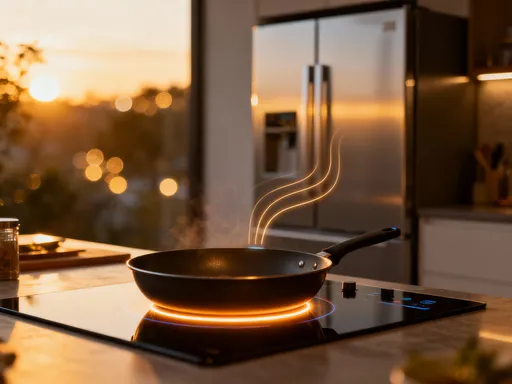
It all started with a simple upgrade. I replaced my old electric stove with a smart induction cooktop—nothing too fancy, just one that could connect to Wi-Fi. Then I added a smart frying pan with a built-in temperature sensor. At first, I thought it was just a gimmick. I mean, how much could a pan really do? But then I linked it to my smart fridge, and everything changed.
Here’s how it works: when I take something out of the fridge—say, a piece of chicken or a block of tofu—the fridge sends a silent signal to the pan. It’s not loud or intrusive. No notifications pop up on my phone. But the pan knows. It reads the temperature of the food as soon as I drop it in, and within seconds, it adjusts the heat suggestion on the cooktop. If the chicken is still a little cold from the fridge, it tells the stove to start low and slow. If it’s already thawed, it says, “Okay, we can sear this now.”
I remember the first time it happened. I was pulling together a quick stir-fry after a long day, and I hadn’t even thought about whether the shrimp was fully defrosted. But the pan knew. It lit up with a soft blue glow—low heat recommended—and I just followed along. No second-guessing. No burned edges. For the first time in years, the dish came out perfectly. I stood there, stirring, thinking, “Wait… did my kitchen just help me?”
This isn’t science fiction. It’s just smart design. The pan and fridge don’t need cables or complicated apps. They connect through the same network I use for music and lights. And because they’re both from brands that support open communication standards, they can share information safely and simply. No tech degree required. Just plug in, pair up, and let them talk.
No More Guessing: Real-Time Alerts That Actually Help
One of my biggest cooking fears has always been walking away from the stove. Not because I’m careless—because I’m a mom. I’m always being pulled in five directions. One minute I’m sautéing onions, the next I’m helping my daughter tie her shoe, and then—oh no, is that smoke?
That used to happen all the time. But now, my smart pan watches the heat for me. It doesn’t just measure temperature—it understands what’s happening. If the oil starts to get too hot, it sends a quiet alert to my smart speaker in the living room. Not a loud alarm. Not a flashing red light. Just a calm, human-sounding voice: “Oil is heating quickly. Consider reducing heat.”
Last week, I was in the middle of a video call with my sister when I smelled something. I thought, “Here we go again.” But then I heard the soft chime from the kitchen speaker: “Sauce is nearing boil. Check in 30 seconds.” I ended the call, walked in, and stirred—just in time. No disaster. No scrubbing a burnt pot for an hour. Just a gentle reminder, like a friend watching my back.
What I love most is that these alerts aren’t constant. They don’t bombard me. The system learns when I’m likely to step away—like during homework time or when the dog needs to go out. It only speaks up when it really matters. That’s the difference between technology that adds stress and technology that removes it. This isn’t about being watched. It’s about being supported.
Meal Planning That Feels Like a Conversation, Not a Chore
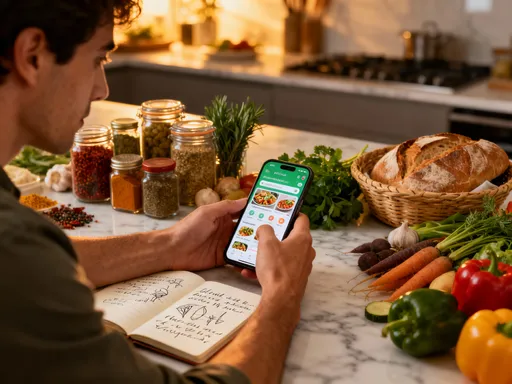
Sundays used to be my dreaded meal-planning day. I’d stand in front of the fridge with a notebook, trying to figure out what needed to be used up before it went bad. Broccoli looking a little limp? Bell peppers losing their crunch? I’d write them down, then spend 30 minutes searching for recipes that used exactly those ingredients. By the time I picked one, I was already tired of the idea.
Now, every Sunday morning, my fridge does a quick scan. It checks expiration dates, recognizes what’s inside—thanks to a built-in camera and food recognition software—and sends me a simple message: “Three vegetables nearing expiry. Two portions of cooked rice available.” Then, my smart recipe app (the one linked to both fridge and pan) suggests three dishes I can make with what I already have.
I tap one—say, a veggie fried rice—and something amazing happens. The recipe loads directly into the cooktop interface. The pan knows which dish I’ve chosen, so it pre-sets the temperature stages. When I start cooking, the stove guides me step by step: “Heat oil to 320°F,” then “Add onions, cook 2 minutes,” then “Add rice, stir continuously.” It’s like having a calm, patient teacher in the kitchen with me.
And because the pan adjusts in real time—if the room is cold, if the oil takes longer to heat—it doesn’t just follow a script. It adapts. I’m not fighting the process. I’m moving with it. What used to take me 20 minutes of prep and stress now takes five. And I’m wasting less food. In the past three months, I’ve cut my food waste by nearly half. That’s good for my budget, good for the planet, and honestly? Good for my peace of mind.
Teaching Kids Independence Without the Anxiety
One of the most unexpected benefits of this setup has been how it’s changed my teenager’s relationship with cooking. A year ago, I wouldn’t let her use the stove alone. Too risky. Too many things could go wrong. But now? She makes her own breakfast most mornings—scrambled eggs, toast, even simple stir-fries.
How? Because the pan won’t let her make dangerous mistakes. If the oil starts to smoke, the stove automatically reduces the heat. If she walks away—even just to grab a plate—the pan detects inactivity and shuts off gently after 30 seconds. No flames. No smoke. No panic.
I get a quiet update on my phone: “Cooking paused. Pan cooling.” It’s not about spying on her. It’s about giving her space to learn while knowing she’s safe. And that makes all the difference. Last week, she made dinner for the whole family—shrimp tacos with avocado salsa. I didn’t lift a finger. I just sat at the table, watching her move confidently around the kitchen, following the pan’s gentle prompts. When she served the food, she said, “I didn’t even have to guess the heat. The pan told me.”
That moment hit me hard. This wasn’t just about convenience. It was about confidence. She wasn’t just cooking a meal—she was learning independence, responsibility, and care. And I wasn’t hovering or worrying. I was present. I was proud. And for the first time, I didn’t feel guilty about letting her take the lead.
Why This Isn’t Just “Smart” but Actually Thoughtful
There are a lot of “smart” gadgets out there—blenders that connect to apps, fridges with screens, ovens you can control from your car. But so many of them feel like they’re shouting for attention. They want you to look at them, play with them, learn their features. They add complexity instead of removing it.
What I’ve found with this pan and fridge setup is different. They don’t demand anything. They don’t flash or beep unnecessarily. They listen. They learn. They act only when it matters. That’s what makes them thoughtful, not just smart.
For example, the pan can tell the difference between reheating leftovers and cooking a new meal. If I put in cold rice, it knows I’m probably making fried rice, so it suggests a higher heat to crisp it up. But if I’m warming soup, it keeps the temperature low and steady. It doesn’t ask me to choose—it just understands. It’s like it knows my habits, my rhythms, even my mood.
And because it’s connected to the fridge, it knows what I have on hand. If I try to start a recipe that calls for milk, but the fridge knows I’m out, it quietly suggests a substitute—maybe oat milk or even a dairy-free version of the dish. No frustration. No last-minute grocery run. Just a gentle nudge in the right direction.
This isn’t artificial intelligence trying to replace me. It’s technology that’s designed to support me—like a good partner, not a robot boss. It doesn’t take over. It just helps me do what I already do, but with a little more ease, a little more confidence.
A Kitchen That Cares: How Small Tech Adds Up to Big Calm
When I first heard about smart kitchens, I thought they were for tech geeks or people with too much money and too little time. I didn’t see how they could matter to someone like me—a busy mom, a home cook, someone who just wants dinner to go smoothly once in a while.
But now I get it. This isn’t about having the fanciest gadgets. It’s about having tools that care. Tools that help you remember, that guide your hands, that protect your peace. When your kitchen can tell you the oil is too hot, or remind you that the broccoli needs to be used, or help your teenager cook safely on their own—it stops being just a room with appliances. It becomes a space that supports your life.
I’ve noticed something since I made these changes: I’m calmer in the kitchen. I’m not rushing. I’m not stressed. I’m actually enjoying the process. I find myself humming while I stir. I’m more present with my family. And when dinner is done, I’m not exhausted—I’m satisfied.
These small connections—pan to fridge, stove to phone, alert to action—don’t just save time. They give you back something even more valuable: presence. The ability to be here, now, without your mind racing ahead to the next thing. That’s not just convenience. That’s a gift.
So if you’re standing in your kitchen tonight, feeling overwhelmed, remember this: you don’t have to do it all alone. Your tools don’t have to be silent. They can help. They can listen. They can care. And sometimes, all it takes is one smart pan—talking quietly to your fridge—to change everything.